Gallbladder disease is one of the most commonly treated surgical diseases in the United States. Treatment typically entails a cholecystectomy or surgical removal of the gallbladder. This can be performed for symptoms from gallstones or gallbladder dysfunction, inflammation or infection, or to prevent secondary complications such as pancreatitis or infection of the main bile duct and liver.
Gallbladder Surgery
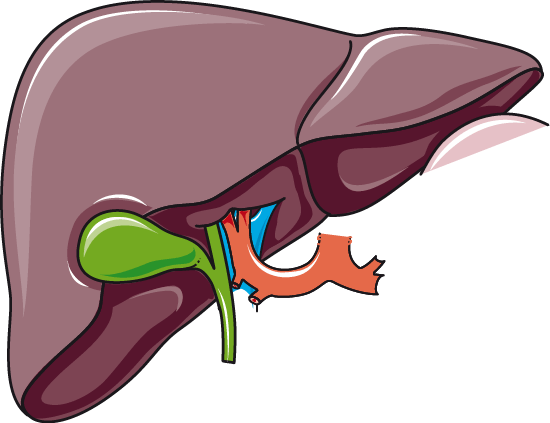
Gallbladder disease is most commonly treated by laparoscopic cholecystectomy. This procedure involves using small incisions with specialized instruments to carefully remove the gallbladder from its attachments to the main bile ducts and liver. Under normal circumstances this procedure carries very little risk of major complications. This changes dramatically in other situations such as in patients with liver disease (cirrhosis), following pancreatitis, or after previous severe gallbladder attacks treated non-operatively or with a drain tube. The risk of complications as well as needing an open operation (large incision) increase in these special circumstances. Dr. Sulzer’s specialty training allows him to perform these higher risk surgeries while minimizing risk and still using small incisions with the surgical robot. We perform well over 100 such procedures per year referred from specialists and other surgeons throughout the region.
Bile Duct Surgery

The bile duct is a tube that connects the liver to the intestines to transport the bile (digestive juice) to the first part of the small intestine called the duodenum. Stones from the gallbladder and other benign conditions can result in temporary or permanent blockages of the bile duct. Effective treatment of these conditions requires a team approach involving gastroenterologists, interventional radiologists and surgeons. The majority of these cases can be treated by specially trained gastroenterologist (GI doctors) with a procedure called ERCP which allows access to the bile duct with a scope introduced through the mouth and down the GI tract. In the rare cases our expert team of GI doctors at Mission are unable to correct a problem with this approach other radiology or surgical procedures may be required. Surgical procedures may include removal of large stones or bypassing blockages in the bile duct that cannot be treated by other means. As with other complex cases, Dr. Sulzer is able to perform many of these bile duct procedures robotically saving the patient a large incision and longer recovery.
 Jesse Sulzer MD PhD