Gallbladder disease refers to a range of conditions that affect the gallbladder, a small organ located beneath the liver. The gallbladder plays a crucial role in the digestive process by storing and releasing bile, a digestive fluid produced by the liver. Here is an overview for a patient:
1. Gallstones:

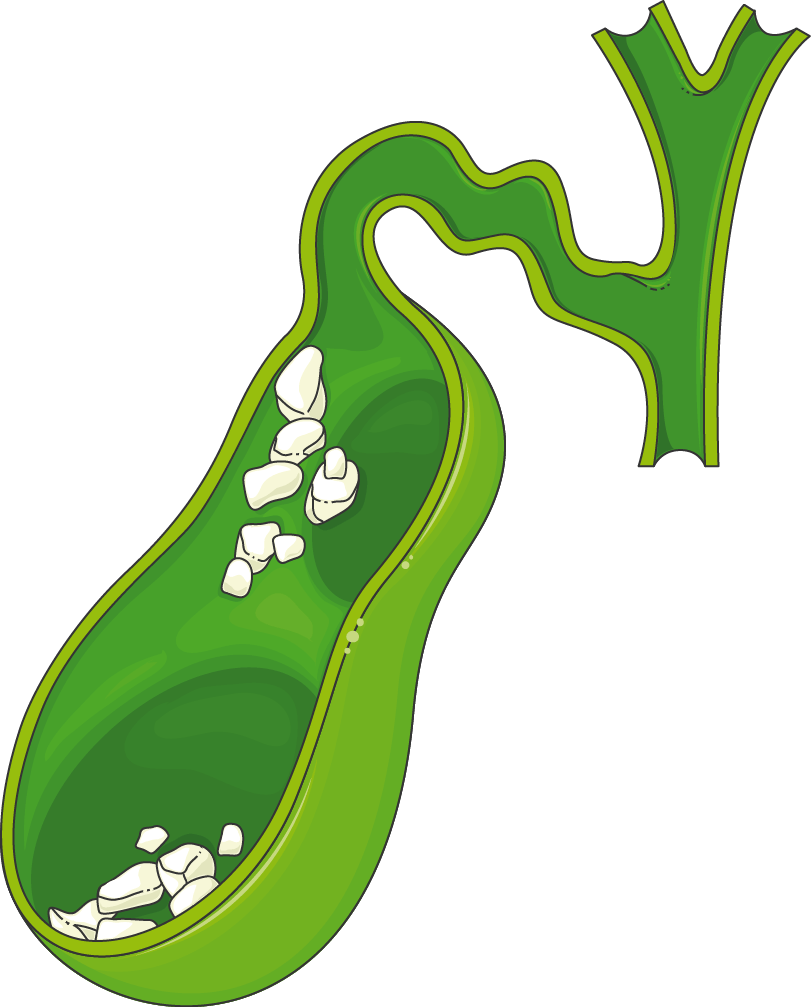
- Description: Gallstones are solid particles that form in the gallbladder. They can vary in size and may block the normal flow of bile.
- Symptoms: Pain in the upper abdomen, nausea, vomiting, and discomfort after eating fatty foods.
- Causes: Imbalances in the substances that make up bile, leading to the formation of stones.
2. Cholecystitis:
- Description: Cholecystitis is the inflammation of the gallbladder, often caused by gallstones blocking the bile ducts.
- Symptoms: Severe abdominal pain, tenderness, fever, and nausea.
- Causes: Gallstones or, less commonly, infections.
3. Biliary Dyskinesia:
- Description: This condition involves abnormal contractions or spasms of the gallbladder, affecting its ability to function properly.
- Symptoms: Recurrent abdominal pain, nausea, and vomiting.
- Causes: Dysfunctional gallbladder contractions.
4. Choledocholithiasis:
- Description: Choledocholithiasis occurs when gallstones block the common bile duct, disrupting the flow of bile from the liver to the small intestine.
- Symptoms: Jaundice (yellowing of the skin and eyes), abdominal pain, and digestive issues.
- Causes: Migration of gallstones from the gallbladder into the common bile duct.
5. Gallbladder Polyps:
- Description: Gallbladder polyps are growths on the inner surface of the gallbladder.
- Symptoms: Often asymptomatic, but larger polyps may cause pain and discomfort.
- Causes: The exact cause is unclear, but they may be related to inflammation.
Treatment Options:
- Treatment depends on the specific condition but may include lifestyle changes, dietary modifications, medications, or surgical intervention (e.g., cholecystectomy – removal of the gallbladder).
- Click here to learn about Cholecystectomy
When to Seek Medical Attention:
- Persistent or severe abdominal pain.
- Jaundice (yellowing of the skin and eyes).
- Persistent nausea and vomiting.
- Changes in bowel movements.
It’s important for individuals experiencing symptoms suggestive of gallbladder disease to seek prompt medical evaluation. Diagnosis and appropriate management are essential for addressing symptoms, preventing complications, and improving overall health. Always consult with a healthcare professional for personalized advice and guidance based on individual health circumstances.
 Jesse Sulzer MD PhD